As June is designated as Pride Month, I happy to have Aisling MacDonald and Layla Orlando of Garden State Equality write a guest blog for us. Established in 2004, Garden State Equality has played a leading role serving the needs of the LGBTQ+ community in New Jersey. I thank Aisling and Layla for sharing their thoughts on best practices for assisting those in recovery.
_______________________________________________________
The Importance of Building Trust and Effective Engagement for Marginalized Communities in Recovery
Aisling MacDonald - Project Manager & Trainer
Layla Orlando - Director of Health, Equity & Wellness
Garden State Equality
gardenstateequality.org
As we celebrate Pride Month in June, we are reminded that recovery work is also trust-building work. For those of us who bring lived experience with substance use disorder recovery into this space, fostering recovery capital in marginalized communities is not theoretical. Effective recovery support must understand people in their environment.
Building trust starts with a simple truth: people usually do not disengage without cause. When someone misses an appointment, stops answering calls, or does not return after one hard interaction, it is easy to label them “noncompliant” or “not ready.” But often, disengagement is information. It shows where the system created friction.
For people navigating recovery, including people of color, immigrants, people with disabilities, people impacted by justice involvement, and LGBTQ+ people, especially transgender and queer people, systems have not always been safe. Help has too often come with judgment, bias, surveillance, or conditions that do not reflect real life. Trust is not a soft extra. It is infrastructure, and for many people entering recovery spaces, it is already depleted. If people do not feel safe, respected, or understood, even strong programming can fall apart.
Effective engagement means asking better questions: Who has the least margin for error? Who is most likely to fall through first? What patterns are we missing when we only look at who stayed connected? Real engagement requires consistency, humility, and follow-through: clearer communication, warm referrals, safer intake practices, trained staff, and trusted community partnerships. When people feel safe enough to return, ask questions, make mistakes, and stay connected, recovery support becomes more than a service. It becomes a bridge.
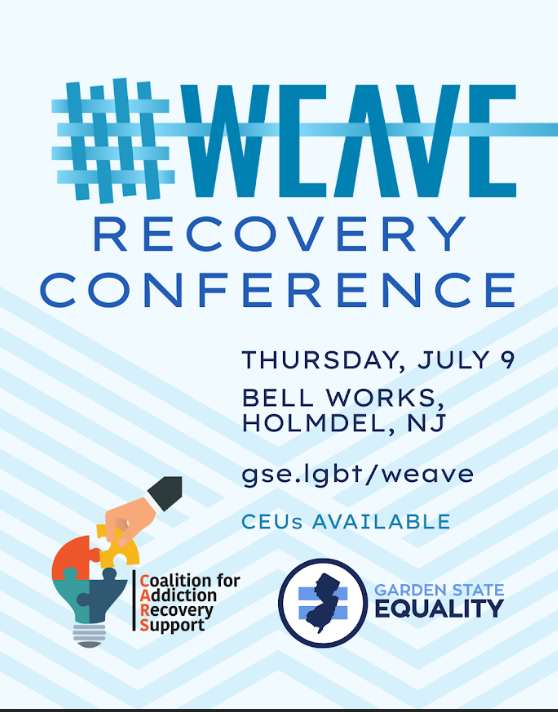
The upcoming WEAVE Recovery Conference, in partnership with NJ CARS, is one opportunity to keep building that kind of recovery ecosystem: one where peer leadership, lived experience, and culturally responsive practices are treated as central to the work, not add-ons.
Register for the WEAVE Recovery Conference at:
gse.lgbt/weave
Notice: This article reflects the opinion of the author and does not necessarily reflect the opinion of the Partnership for a Drug-Free New Jersey (PDFNJ). This information should not be construed as legal advice from the author or PDFNJ. Please consult your own attorney before making any legal decisions.